
Most engineers struggle with motor selection: for the same power rating, induction motors are cheaper and more rugged, while permanent magnet motors save energy and deliver higher efficiency. How do you choose the right one?
Today, we break down their essential differences in plain language, with accurate data and scenario-based comparisons, helping you avoid selection pitfalls for good.
Today, we break down their essential differences in plain language, with accurate data and scenario-based comparisons, helping you avoid selection pitfalls for good.
1. Core Essential Differences (Understand in One Sentence)
This is the root of all performance gaps. Keep these two points in mind, and you will never mix them up:
-
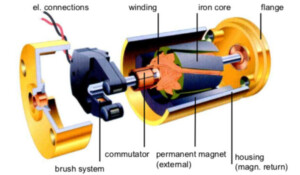
Asynchronous Motor (Induction Motor)No permanent magnets on the rotor. Rotor current and torque are generated by electromagnetic induction from the stator’s rotating magnetic field. The rotor always runs slightly slower than the stator magnetic field, resulting in slip ratio.
-
👉 Analogy: You run ahead, and someone behind is pulled along by your momentum but can never catch up. Extra energy loss caused by slip ratio is the fundamental reason for the lower efficiency of induction motors.
-
Permanent Magnet Synchronous Motor (PMSM)The rotor is embedded with rare-earth permanent magnet steel. The rotor rotates synchronously at exactly the same speed as the stator magnetic field, with no slip and zero speed difference.
-
👉 Analogy: Two magnets face each other; every step you take is followed precisely by the magnet, with no deviation at all.
Note: This comparison focuses on the most widely used industrial three-phase squirrel-cage induction motor and three-phase permanent magnet synchronous motor. Permanent magnet motors also include Brushless DC Motors (BLDC), which follow a similar principle but are mainly applied in small-sized equipment.
2. Precise Application Scenario Classification (Direct Reference for Selection)
Scenarios Where Induction Motors Are Preferred
- Constant-speed, full-load general-duty applications: ordinary fans, water pumps, air compressors, and conveyor belts.
- Low-end equipment with tight budget constraints and low efficiency requirements.
- Extremely harsh working conditions with ultra-high temperature (≥180℃), severe vibration or strong corrosion, such as metallurgy, mining and drying processes.
- Short-cycle operation (daily running time < 4 hours) and heavy impact load equipment: crushers, punching machines.
- Unattended equipment in remote areas with poor maintenance conditions.
Scenarios Where Permanent Magnet Motors Are Preferred
- Equipment with long continuous operation and variable load conditions (the energy-saving effect is most prominent).
- Applications with strict restrictions on size and weight: new energy vehicles, marine vessels, aerospace equipment and robots.
- Equipment requiring low-speed high torque and high-precision speed regulation: machine tools, high-speed spindles and injection molding machines.
- National energy-saving renovation projects and enterprises subject to energy consumption assessment indicators.
- Battery-powered mobile equipment (remarkably improved endurance).
3. Clarification of Common Industry Misconceptions
-
Misconception 1: Permanent magnet motors are always better than induction motorsThere is no absolute good or bad—only suitability for application scenarios. For harsh working conditions with heavy impact such as mining crushers, induction motors offer far higher reliability. Blindly adopting permanent magnet motors will lead to frequent failures and higher maintenance costs.
-
Misconception 2: Permanent magnet motors are sensitive to high temperatures and unsuitable for industrial useWith optimized cooling structures and high-temperature-resistant magnetic steel, modern permanent magnet motors are widely used in high-temperature scenarios such as marine and metallurgical industries. Nevertheless, induction motors remain the top choice for ultra-high temperature conditions (≥200℃).
-
Misconception 3: Permanent magnet motors require more maintenance than induction motorsAs long as operating temperature and load are kept within rated limits, permanent magnet motors require exactly the same level of maintenance as induction motors — only regular bearing lubrication is needed. In addition, permanent magnet motors require no reactive power compensation, further reducing maintenance workload.
-
Misconception 4: Induction motors already have high efficiency, so there is no need to switch to permanent magnet motorsFor equipment running over 6,000 hours annually, even a 5% efficiency improvement yields substantial annual electricity savings. Taking a 100kW motor as an example, the annual electricity cost saved can reach approximately 40,000 RMB.