
Motor selection does not require blind selection based on experience. By judging in sequence according to seven major dimensions including load working conditions, torque and power, control accuracy, speed regulation requirements, service environment, inertia matching, cost and service life, reasonable matching can be achieved to avoid overload, motor burnout and ensure stable operation.
I. Calculate Core Load Parameters First (Foundation of Selection)
1. Rated Power Calculation
Calculate the continuous load power according to the actual operating resistance, traction, conveying, stirring and other working conditions of the equipment.
Regular continuous load: Reserve 10%~15% power margin
Impact load, frequent start-stop and forward & reverse operation equipment: Reserve 20%~30% power margin
Long-term full-load operation shall be prohibited to prevent overheating and aging.
2. Output Torque Calculation
Torque determines the load capacity of the motor. The general engineering calculation formula:T: Rated torque (N·m); P: Rated power (kW); n: Rated speed (r/min)
Under the same power, the lower the speed, the greater the output torque. For heavy-duty equipment, priority shall be given to reducing speed and increasing torque.
3. Determine Speed Range
General standard working conditions: 1500r/min, 3000r/min
High-speed equipment (fan, spindle): Select special high-speed permanent magnet / switched reluctance motors
Low-speed and high-torque equipment: Prioritize low-speed motors to simplify the deceleration transmission structure
4. Essential Verification for Automated Equipment: Inertia Matching
For motion equipment such as manipulators, modules and conveyor lines, it is necessary to check the ratio of load inertia to motor inertia. Excessive ratio will cause jitter, poor response and unstable control.
II. Select Motor Type by Control Accuracy & Working Conditions
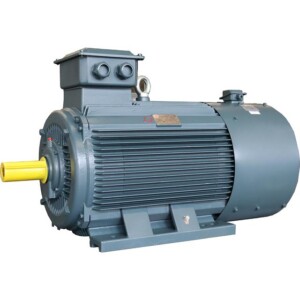
Continuous constant speed & general industrial load Preferred: Asynchronous Induction MotorIt features sturdy structure, maintenance-free and high cost performance, suitable for fans, water pumps, air compressors and ordinary conveying equipment.
Long-term operation, energy-saving renovation & limited space Preferred: Permanent Magnet Synchronous Motor (PMSM)It has high efficiency, high power density and excellent low-speed torque, applicable to energy-saving equipment, industrial supporting and new energy equipment.
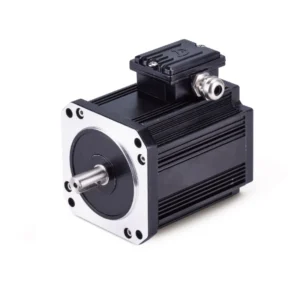
Small-sized equipment, battery power supply & low noise demand Preferred: Brushless DC Motor (BLDC)With small size, long service life and smooth speed regulation, it is suitable for household appliances, power tools, drones and small ventilation equipment.
High-precision positioning, rapid start-stop & closed-loop control Preferred: Permanent Magnet Synchronous Servo MotorIt boasts strong overload capacity, fast dynamic response and accurate positioning, widely used in machine tools, manipulators, packaging, semiconductor automatic production lines.
Low-speed point control, limited budget & simple mechanism Preferred: Stepper MotorIt has simple control and low cost for open-loop positioning.Disadvantages: Weak high-speed torque, no overload capacity, prone to heat generation during long-time operation, not suitable for continuous high-speed working conditions.
III. Selection by Speed Regulation and Driving Mode
Fixed speed & direct power grid drive Low-power asynchronous motors can run directly at power frequency; high-power motors must be equipped with star-delta starters or soft starters to avoid starting impact.
Stepless speed regulation & variable frequency operation required Equipped with frequency converter for driving, compatible with asynchronous motors and permanent magnet synchronous motors.
Low noise & stable low-speed operation Adopt BLDC quasi-sine wave or FOC control scheme.
Ultra-high speed operation Select special high-speed motors matched with high-frequency drivers; field weakening control is only used in the super-base speed range, which is not required within the base speed.
IV. Type Selection Combined with Service Environment
Conventional indoor dry environment Standard protection grade IP54, IP55 and Class F insulation grade are sufficient.
Dust, humidity & outdoor open-air scenarios Upgrade the protection grade to IP65 or above, with anti-condensation and anti-corrosion coating design.
High temperature, baking, metallurgy and other harsh environments Adopt special motors with Class H high-temperature resistant insulation, high-temperature resistant bearings and enhanced heat dissipation structure.
Chemical, oil, gas and flammable & explosive areas Explosion-proof motors are mandatory to meet regional explosion-proof grade requirements.
Severe vibration & impact working conditions Reinforce the body structure, and adopt vibration-resistant bearings and enhanced insulation design.
V. Matching Power Supply and Installation Specifications
Low-voltage small equipment: 24V, 48V, 220V single-phase power supply
Conventional industrial equipment: 380V three-phase power supply
Large high-power working conditions: 660V, 6kV high-voltage industrial motors
Confirm the installation method at the same time: horizontal / vertical, base mounting / flange mounting, to ensure perfect matching with the mechanical structure.
VI. Comprehensive Balance of Cost and Long-Term Service Life
1.Budget-sensitive & simple constant speed working conditions → Asynchronous Motor
2.Long-term continuous operation & energy saving → Permanent Magnet Synchronous Motor
3.Precision automatic production lines & high-end equipment → Servo Motor
4.Portable equipment & lithium battery powered products → Brushless DC Motor