
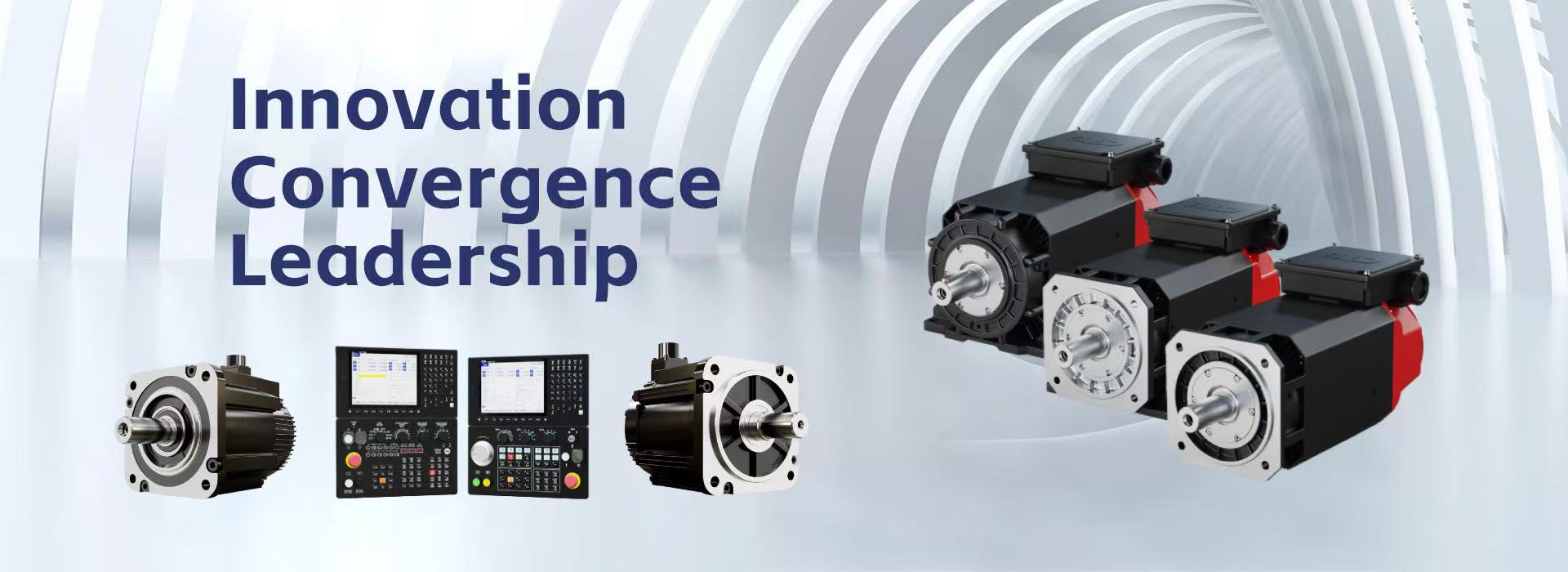
Choose the Right “Heart” for Your Machine Tool, and Multiply Production Efficiency Several Times Over!
As the core component of precision machining, the choice between imported and domestic motor spindles directly determines machining accuracy, production costs and production line stability. It also poses a critical decision-making challenge for manufacturing business owners and procurement specialists. Today we break down their core differences with exclusive practical insights to help you make precise selections!
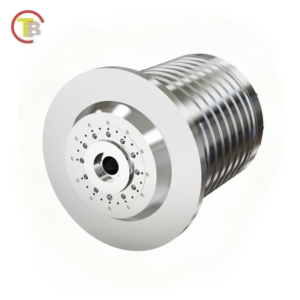
Part 1 Imported Motor Spindles: The Performance Benchmark for High-End Manufacturing
Backed by decades of accumulated expertise in materials science and manufacturing craftsmanship, imported motor spindles excel in sustained precision retention and long-term operational stability. High-end models deliver rotational precision within 0.1 micrometers, with no notable precision degradation after years of continuous operation, boasting a far longer Mean Time Between Failures (MTBF) than equivalent domestic alternatives.
Their strengths in high speed, high torque and low temperature rise make them irreplaceable for ultra-precision machining applications such as aerospace and semiconductor manufacturing. Brands including Italy’s Hiteco and Switzerland’s FISCHER are established benchmarks in the high-end segment.
Nevertheless, they carry clear drawbacks: premium pricing. Many clients also voice concerns over lengthy lead times for customized orders and slow after-sales maintenance support. As the exclusive China authorized distributor of Italy’s Hiteco motor spindles, Beimeixi delivers shortened lead times to avoid production downtime for customers. We also operate domestic maintenance centers to provide one-stop support covering pre-sales commissioning and after-sales repairs, resolving all issues on your production lines.
Part 2 Domestic Motor Spindles: Cost-Effective Contenders with Rapid Tech Breakthroughs
Domestic technology has advanced by leaps and bounds in recent years. Certain domestic brands now match international standards in rotational speed and precision. Some spindles designed for semiconductor and PCB machining achieve precision up to 0.03 micrometers with dynamic radial runout below 0.5 micrometers, fully meeting mid-to-high-end machining demands for 3C electronics and new energy vehicle components.
Domestic motor spindles come at a lower price point compared to imported counterparts. Supported by local after-sales service hubs and short delivery cycles, they can also be custom-engineered to suit specific working conditions, catering to the flexible operational needs of small and medium manufacturers.
The primary gaps remain in high-grade material processing techniques and long-term reliability. Imported spindles are still necessary for extreme-duty applications requiring ultra-high rotational speeds or heavy load capacities.
Part 3 Core Selection Principle: Prioritize Application Matching
Imported and domestic motor spindles each have distinct merits. A well-matched spindle acts as a powerful driving engine for your production line, while an ill-suited model will drag down overall output.
For high-end manufacturing involving ultra-precision and long continuous production runs, the superior stability of imported spindles justifies the investment. For general mass production of standard-spec workpieces, domestic spindles deliver outstanding cost performance and drastically cut overall operating expenses.
When sourcing, focus on three core parameters: precision, rotational speed and torque. Additionally, evaluate after-sales response efficiency and spare parts supply to identify the most compatible solution.
Part 4 Targeted Selection Support: Empower Your Decisions with Professional Consultation
If you are struggling to decide between imported and domestic motor spindles for your unique working conditions, feel free to reach out for consultation. Our professional team will craft tailored selection solutions based on your machining requirements and budget planning!